Are Titanium Cutting Boards Worth It? An Honest Look
This post contains affiliate links. As an Amazon Associate, I earn from qualifying purchases at no extra cost to you.
Titanium cutting boards are everywhere right now, usually marketed as the cleaner, longer-lasting replacement for wood or plastic. But are they actually worth buying—or just another kitchen trend?
The honest answer: a titanium board can be worth it for the right kitchen, but it is not automatically better for everyone. Here is what matters before you spend the money.
The Titanium Cutting Board Worth Considering
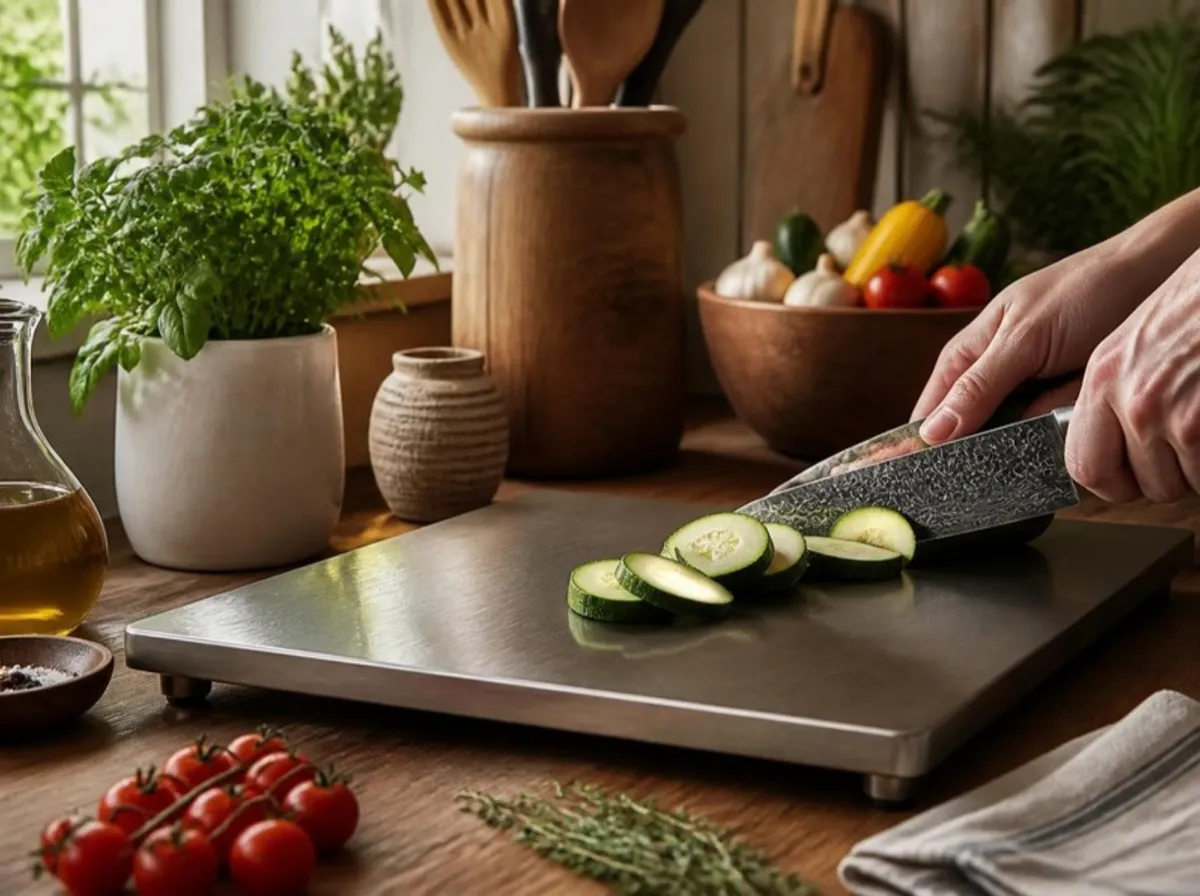
This 16-by-12-inch titanium cutting board offers a large, thin prep surface without the bulk of a heavy butcher block. According to the product listing, it is double-sided, nonporous, dishwasher-safe, and suitable for meat, produce, bread, pastry, and dough.
Why it stands out: it gives you generous prep space, stores easily, and is designed for people who want cleanup to be simple. The braced edge may also help keep the board from shifting while you chop.
Best for: frequent meal prep, canning days, baking, small kitchens, and cooks tired of stained or deeply scratched plastic boards.
View the Titanium Cutting Board on Amazon →
What to Know Before You Buy
A metal cutting surface feels and sounds different from wood or plastic. If you love the quiet, forgiving feel of a wooden board, titanium may feel too firm. You should also measure your sink, dishwasher, and storage space before ordering a 16-by-12-inch board.
And no cutting-board material replaces safe food handling. Wash it properly, separate raw-meat prep when appropriate, and follow the manufacturer’s care instructions.
Titanium vs. Wood vs. Plastic: The Quick Comparison
Titanium: thin, light, nonporous and easy to wash. It will not stain or hold onto smells. It is also the hardest surface of the three, so it feels firm under your knife.
Wood: quiet, forgiving and gentle on knife edges. It looks beautiful on the counter. It also needs hand washing and an occasional oiling, and it is not a dishwasher item.
Plastic: inexpensive and dishwasher-friendly. Over time it collects deep knife grooves and stains, and those boards need to be replaced more often.
My simple rule: if cleanup and stains are your biggest frustration, titanium makes sense. If you care most about protecting your knives and a quiet, soft feel, stay with wood.
Will a Titanium Board Dull My Knives?
This is the question most people forget to ask. Harder cutting surfaces are tougher on knife edges than wood or soft plastic. That does not mean your knives are ruined. It means a few small habits matter more:
Slice and rock gently instead of chopping hard straight down.
Hone your knives more often. A few passes on a honing rod before you cook keeps the edge straight.
Save your best knife for a wood board if you have one you love.
The Knife Set That Completes the Upgrade
A better cutting surface is most useful when the knives doing the work are comfortable and sharp. The NANFANG BROTHERS seven-piece Damascus knife set includes the everyday knives needed for chopping, slicing, and detailed prep, plus kitchen shears and a storage block.
If your knives are dull, mismatched or uncomfortable, a better board will not fix that on its own. A matched set gives you the right knife for each job, so prep feels easier instead of harder.
Best for: home cooks replacing a mismatched knife drawer, wedding or housewarming gifts, and anyone ready for a coordinated everyday set.
View the Damascus Knife Set on Amazon →
Want a budget-friendly option? The PAUDIN 14-piece knife set with block covers the same everyday jobs, chopping, slicing and trimming for a lower price. If you only want to replace the one knife you use most, the PAUDIN chef knife set is a smaller step up.
View the PAUDIN 14-Piece Set on Amazon →
Should You Buy One?
Choose the titanium board if your biggest frustrations are cleanup, stains, storage, or not having enough room to prep.
Skip it if you rarely cook, strongly prefer the feel of wood, or are only interested because titanium is trending.
Add the knife set if your current knives are dull, mismatched, uncomfortable, or scattered through a drawer. Together, the board and knives create a practical kitchen upgrade—but each product still solves a different problem, so you do not need to buy both.
How to Care for a Titanium Cutting Board
Wash: warm, soapy water works. If the manufacturer says it is dishwasher-safe, you can also run it through the dishwasher.
Dry: dry it fully before you put it away, especially if you store it standing up in a narrow space.
Skip harsh scrubbers: steel wool can scratch the finish. A regular sponge is enough.
Keep raw meat separate: use one side for raw meat and wash it well before cutting anything that will not be cooked.
Stop the slide: if it moves while you cut, set a damp dish towel underneath it.
Quick Questions Before You Buy
Is titanium safe for food?
Titanium is non-reactive, which is why it shows up in cookware and kitchen tools. Before you buy, check that the listing says the board is made of food-grade titanium, not just titanium-coated.
Is it worth the price?
It is worth it if you prep often and want something that stays clean-looking for years. If you cook a few times a month, a good plastic or wood board will serve you just as well for less.
Will it fit in my dishwasher?
Measure first. A 16-by-12-inch board may not fit every dishwasher or sink, and that is an easy thing to check before you order.
The Bottom Line
A titanium cutting board is not magic. It is worth the investment when its thin profile, generous size, and easier cleanup solve problems you already have. Pairing it with a dependable knife set can make everyday prep noticeably smoother, but the smartest purchase is always the one that fits the way you actually cook.
Want a few good deals a day? I share Walmart and Amazon finds families actually use in my free Facebook group.
Join Real Life with Alyssa: Deals & Finds →