Creatine for Women: What It Does and What to Watch For
This post contains affiliate links. If you buy through them, I may earn a small commission at no extra cost to you. BUBS Naturals sent me this tub for free. I'm not a doctor, so please talk to yours before starting any supplement.

Why I looked into this
Every time I scroll, someone is telling women to take creatine. Most of those posts skip the part about what to watch for.
BUBS sent me a tub to try as part of my workout routine. Before I put anything in my body, I want to know what it is. So I read what the research actually says.
Here's the plain version.
What creatine is
Creatine is something your body already makes. You also get some from meat and fish. Most of it is stored in your muscles, where it helps with quick bursts of energy, like lifting or sprinting.
Women tend to make less of it and eat less of it than men. That's one reason researchers are paying more attention to women now.
What the research says it does
Strength and muscle: paired with strength training, creatine may help build strength and muscle. This is the best-studied use.
Short bursts of effort: it may help with repeated hard efforts, like sets of squats or sprints.
After menopause: researchers call the evidence strongest here, mostly for muscle when it's paired with lifting.
Brain and mood: early research looks interesting, mostly in older adults. It's not settled yet.
Bones: Mayo Clinic says no clear bone density benefit has been found.
One thing to keep in mind: creatine works with exercise. It isn't a shortcut around it.

What to watch for, especially as a woman
1. The scale may go up at first
Weight gain is the side effect Mayo Clinic lists. Early on, that's usually water pulled into your muscles, not fat. If you weigh yourself daily, know this going in so it doesn't throw you.
2. Pregnant or breastfeeding? Ask first
There isn't much research on creatine during pregnancy or breastfeeding. Talk to your OB or midwife before you start.
3. Kidneys and lab work
Studies in healthy people at recommended amounts haven't found kidney harm. If you have kidney disease, ask your doctor first.
Also tell your doctor you take it before blood work. Creatine can raise a kidney lab number called creatinine, even when your kidneys are fine.
4. Your coffee habit
Caffeine may make creatine work less well. The research isn't settled, but it's worth knowing if you take it with your morning coffee.
5. An upset stomach
Some people get stomach upset, especially with a big amount at once. Follow the label and drink plenty of water.
6. The hair loss worry
This fear traces back to one 2009 study in young male rugby players. It measured a hormone, not hair. If you're already dealing with thinning hair, bring it up with your doctor.
7. What's on the label
Look for creatine monohydrate, the most-studied form. Look for third-party testing, like an NSF seal. And skip blends that don't tell you how much creatine is inside.

The one I tried: BUBS Boost Creatine
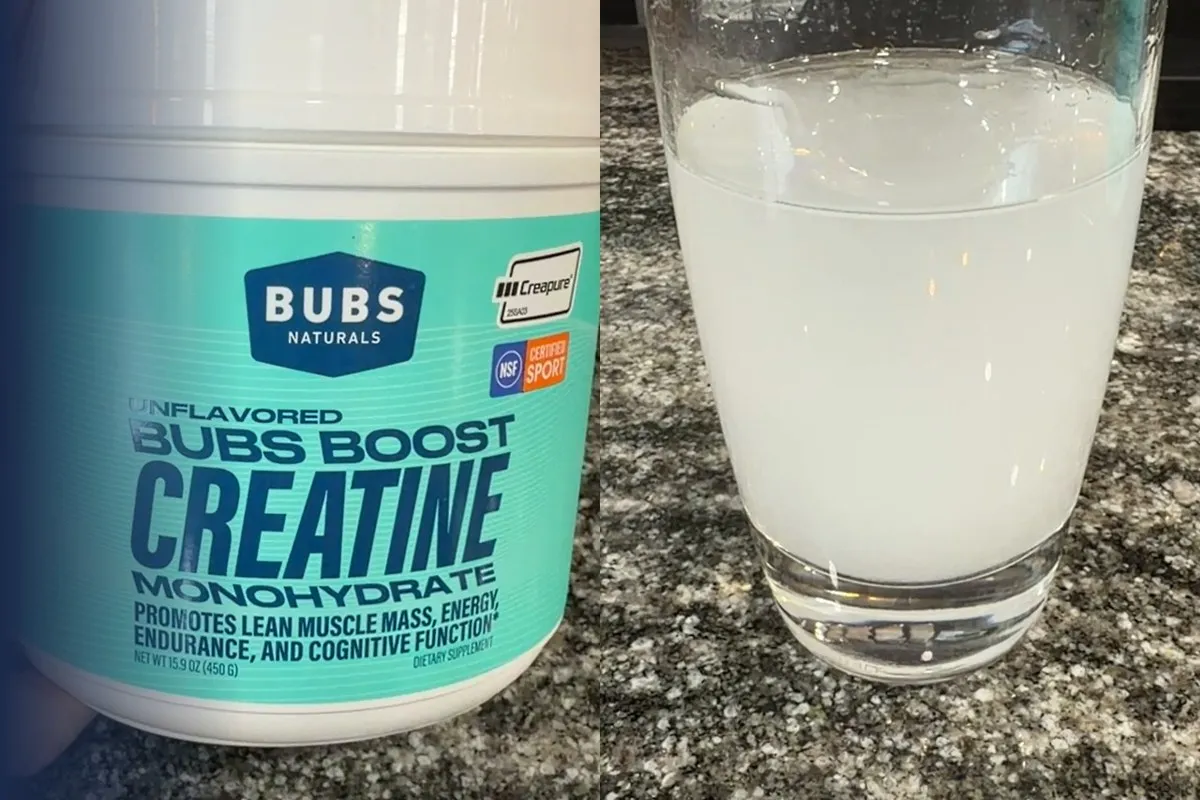
I mixed it in plain water at my kitchen counter. It mixed fairly well, but I noticed a little grit at the bottom. I could still drink it without any issues, and I'd buy it again.
What the label says: 5 g of Creapure creatine monohydrate per scoop, unflavored, no fillers, 90 servings. It's NSF Certified for Sport.
Rating: 4.4 out of 5 stars from 67 ratings on Amazon.

Before you start
Bring the tub to your next appointment. Ask your doctor if it fits your health and any medicines you take. Then follow the label's directions.
Ratings were checked on Amazon on October 27, 2026 and can change.
Where this came from
Mayo Clinic: Creatine · Creatine in women's health, from menstruation to menopause (2025 review) · Creatine in women's health: a lifespan perspective (2021 review)
Get the deals first
My free deals group gets extra codes on finds like this one. Join the deals group →
Follow along
More real-life finds on Pinterest, Instagram and my Amazon storefront.